

Meet the
SUPER-SEEDERS

MILES HILLMANN

The Super-Seeders are the scientists, gene bank curators and managers, treaty negotiators and crop breeders – indeed all those involved with creating the seven pillars on which the plant genetics revolution is based and in breeding crops that can withstand the challenges of a changing world and provide food security.

This book is their story told in their voices. This is the story of the Super-Seeders.

The People Powering a Quiet Revolution

Some are global leaders in their field. Others are smallholder farmers in remote regions, trialling new varieties in the harshest conditions. What unites them is a shared mission: to protect and adapt our crops in the face of climate change, disease, and food insecurity. This page introduces just a few of the voices and stories featured in The Super-Seeders — each one helping to bring the Seven Pillars to life.

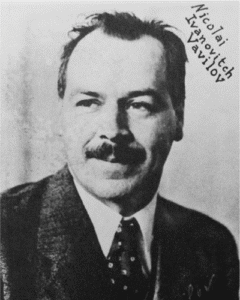
Nikolay
Vavilov​

black and white photo of a man
Visionary Scientist​

In the 1930s, Vavilov and his team collected tens of thousands of crop varieties from around the world — many of which are still used in breeding today. During the Siege of Leningrad, his scientists chose to starve rather than eat the seeds in their vault. Vavilov’s legacy is the moral and scientific foundation of every gene bank today.

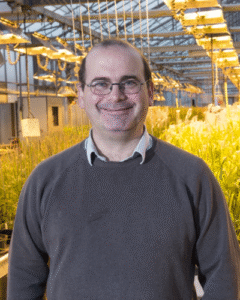
Dr. Simon
Griffiths

Group Leader, Delivering Sustainable Wheat (DSW) Programme
- John Innes Centre, UK

A wheat geneticist at the John Innes Centre, Simon’s work focuses on unravelling the complexity of plant immunity and yield traits. His lab links old wheat varieties with cutting-edge genomics to breed stronger, more resilient crops — all without losing the traits that farmers depend on.

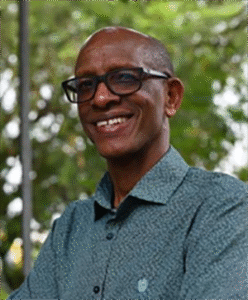
Dr. Jean Claude
Rubyogo

The Global Bean Program Leader and Director of the Pan-Africa Bean Research Alliance (PABRA).

From personal tragedy to Pan-African transformation, JC’s market-led approach to seeds and sustainability has empowered millions of smallholder farmers—especially women—across Africa.

JC’s model has had an impact across Africa resulting in soaring rates of adoption of new varieties of beans (6% to 65%), and yields per acre of beans trebling.

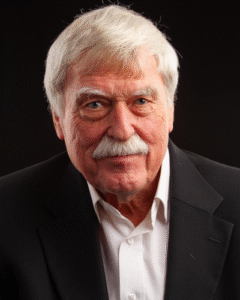
Dr. geoff
Hawtin OBE

Global Policy Leader, World Food Prize winner 2024​

A former Director General of CIAT and co-founder of the Crop Trust, Geoff has spent decades fighting to secure funding and policy frameworks for global seed sharing. His leadership helped cement the International Treaty on Plant Genetic Resources — making genetic diversity a shared global asset.

Dr. Carolina Sansaloni

Head of the Wheat Gene Bank, CIMMYT, Mexico.

In 2012, Carolina moved from Argentina to Mexico, where she took on the monumental task of characterising CIMMYT’s vast wheat collection of 150,000 accessions company pioneering a new genotyping method: DArTseq.

Dr Cian
Duggan

CEO and Founder of Resurrect Bio who help crops defeat disease.

The in-house FloraFold® AI technology resurrects R-genes, giving crops the tools to defend themselves again and  guides the rapid trait discovery platform to revolutionise time to field.


Professor Cristóbal Uauy

Director of John Innes Centre

His programme focuses on using genetics and genomics to improve both yield and quality components in wheat. His lab uses molecular genetic approaches to identify genes involved in wheat productivity traits and enhance the translation of this knowledge into improved varieties. His lab also develops open-access tools and resources to enhance scientific discovery

Professor Diane Saunders

Group Leader Delivering Sustainable Wheat, Advancing Plant Health at the John Innes Centre

Diane’s lab focuses on investigating (re-)emerging plant pathogens that pose a significant threat to agriculture. Her research group largely studies the wheat rust pathogens.


Dr. Elliott
Grant

General Manager of Mineral - the brainchild of
Google’s X lab

Grant was the founder and CEO of HarvestMark, the world leader in fresh food traceability (acquired by Trimble); the CEO of ShopWell, a personalised nutrition company; and served as the Vice-Chair of the Produce Marketing Association, a global industry organisation.

Mineral’s flagship creation is a large, unmanned rover—slightly bigger than a Smart car—loaded with sensors and cameras. It trundles between crop rows, collecting detailed plant data to identify which varieties are thriving. conceived to help farmers make better decisions through cameras and machine learning.

Professor Graham Moore FRS

morre
Director of the John Innes Centre from 2022 to 2025. Most of his research has focused on understanding cereal genetics.

Professor Moore developed the pioneering concept of cereal ‘Synteny’, for which he was awarded the Royal Society Darwin Medal in 1998. His research provides an understanding of the control of pairing and crossover between related chromosomes in wheat and enables genes from wild relatives to be incorporated into the wheat genome.

He coordinated the BBSRC-funded cross-institutional wheat programme, Designing Future Wheat, involving eight UK institutions from 2017 to 2023.


Dr. Hapson Mushuriwa

Global Head of Plant Breeding at the International Institute of Tropical Agriculture (IITA), based in Ibadan, Nigeria

He leads breeding programmes across several crops. But, he says, “cassava is the flagship.”

Dr. Ismael
Kayondo

Kayondo-640x307
Cassava breeder for East and Southern Africa at the International Institute of Tropical Agriculture (IITA).

Based in Dar es Salaam Kayondo’s team works to combine cassava brown streak disease resistance with farmer-preferred root qualities.

Dr Ismael
Rabbi

Ismail-Y-Rabbi-1
Cassava Breeding Lead at the International Institute of Tropical Agriculture (IITA).

Based in Ibadan, Nigeria, Rabbi is the Adjunct Associate Professor at Cornell University’s College of Agriculture and Life Sciences

Dr. Ismail leads breeding initiatives to develop improved cassava varieties for food security and industry.

Dr jack
de Wit

royal-gd-sjaak-de-wit-expert
Manager of the worldwide contract-research portfolio of Rijk Zwaan.

Rijk Zwaan is the Dutch world leader in glasshouse vegetable seed production.

De Wit’s role is taking care of the business aspects of Plant Breeding and Biotechnology Research, Technology Transfer, Patenting and Licensing, in close interaction with internal and external species.

Dr. James
Canham

james_canham
Manager of GetGenome.

Manager of GetGenome, an initiative with the mission of building local capacity to utilise genomics, an important but often inaccessible discipline within life science research.

James
Melichar

cereal
Portfolio Manager for Syngenta.

James Melichar is the Yorkshire born European Portfolio Manager for hybrid cereals for Syngenta. Syngenta , owned by Chem Core, are the leading Chinese crop breeding company. Syngenta breed GM crops in the USA and Brazil, but James work focusses on developing viable commercial hybrid wheat varieties.

Professor Jonathan Jones FRS

JJ-Wolf-2025
Head of the Sainsbury Laboratory from 1994 - 1997 and 2003 - 2009

Jones is a professor at University of East Anglia and has served as editor of The Plant Cell and Genome Biology.

Wolf Prize in Agriculture winner 2025.

His team isolated and characterised many resistance (R) genes that encode plant immune receptors and revealed key insights into immune receptor mechanisms. Jones laboratory currently investigates paired NLR immune receptor function

Professor Dr. Jose Esquinas- Alcazar

pepe
Father of the International Plant Treaty

Professor Dr. Jose Esquinas-Alcazar, universally known as “Pepe”, is the person most deserving of the phrase ‘Father of the International Plant Treaty’.

From 1985 to his retirement from the FAO in 2007, Pepe was secretary to the commission for the FAO responsible for negotiating the International Treaty on Plant Genetic Resources for Food and Agriculture.


Dr. Kamil
Witek

Group Leader 2Blades Group in The Sainsbury

As a team leader, Kamil focused on using natural plant diversity and state-of-the-art technologies to develop durable genetic resistance to Asian Soybean Rust and devastating corn diseases in collaboration with industry. Currently, the group he leads is aiming at delivering ASR resistant soybean for smallholders in Africa.

Dr. Marcela Santaella

Genebank Operations Manager at Alliance Bioversity International and CIAT in Columbia

Santaella is the Genebank Operations Manager at Alliance Bioversity International and CIAT in Colombia. CIAT is the CGIAR gene bank responsible for cassava (6,000 accessions of cassava with about 15 plants per accession, so there  are about 56,000 plants), common beans (38,000 accessions) and tropical forages (22,500 accessions) .

Michael
Halewood

michael halewood

Michael coordinates CGIAR engagement in international negotiations for the development of new norms related to genetic resources and digital sequence information, under the framework of the CGIAR Genebank Initiative, as part of a the Genetic Resources Policy Group.

Professor Mike Bevan FRS OBE

Emeritus Fellow John Innes Centre

His work laid the foundations of modern day plant molecular biology and genetics. He pioneered plant transformation and expression technologies, developing the most widely used vector and gene expression systems.


Dr. Monica Carvajal-Yepes

Spearheads the 'Digital Genebank' at the new Future Seeds innovation hub at CIAT, Colombia.

Dr. Monica Carvajal-Yepes is a plant pathologist and molecular biologist whose work focuses on strengthening crop health and disease surveillance in low-income regions. 

Dr Nick
Bird

Nick-Bird
Lead of winter wheat research for KWS UK.

Bird leads external collaborations with academia and industrial partners. KWS, a private German company, are among the top ten seed breeders in the world.

Professor Nick Talbot FRS

Picture By Jim Wileman  09/04/2014  Professor Nick Talbot
Professor of Molecular Genetics and Deputy Vice-Chancellor Research and Knowledge Transfer.
Executive Director and Group Leader, The Sainsbury Laboratory, Norwich, UK.

Research in the Nick Talbot group involves the understanding of how fungi are able to cause disease in plants, specifically one of the world’s most devastating diseases called rice blast.

Dr. Noam
Chayut

moan
Head of the Germplasm Resources Unit at John Innes Centre.

Chayut’s vision has been to associate crop conservation with crop genomics and high throughput seed phenomics, aiming at broadening the gene-pool diversity used in crop science, and empowering crop improvement through traditional and modern (precise) plant breeding.

Professor Paul Nicholson

Group Leader Delivering Sustainable Wheat (DSW) at John Innes Centre.

The focus of the Nicholson lab’s research is on investigating the genetic basis of resistance to a number of pathogens of wheat and barley.

Dr. Peterson Wambugu

Peterson-Wambugu
Head of the Genetic Resources Research Institute (GeRRI), formerly the National Seed Bank of Kenya

Dr. Peterson Wambugu is the Head of Kenya’s Genetic Resources Research Institute (GeRRI), formerly the National Seed Bank of Kenya.

Dr Sarah
Hearne

sarah hearne
Chief Science and Innovation Officer at CIMMYT, Mexico.

She currently leads Seeds of Discovery initiative (SeeD) of CIMMYT and the trait discovery and deployment space of the Excellence in Breeding Platform.

Professor Sophien Kamoun FRS

sophien
Head of the Sainsbury Laboratory (2009-2014)

Kamoun served as head of The Sainsbury Laboratory (2009–2014), is a professor at the University of East Anglia, and in 2018 was elected Fellow of the Royal Society. His work has reshaped how we understand plant immunity—and how we might fight to preserve it.

Dr. Susanne
Dreisigacker

Susanne-Dreisigacker
Head of CIMMYT’s Wheat Molecular Breeding Lab.

Dreisigacker ensures that wheat breeders use the appropriate wheat material to conduct gene profiling and genome sequencing.

Dr. Venuprasad Ramaiah

venuprasad
Currently leads the Fit-for-Future Genetic Resources cluster.

Ramaiah oversees the operation of the International Rice Genebank – the world’s largest collection of rice genetic diversity which holds more than 132,000 available accessions held at the International Rice Research Institute. IRRI  is a member of the CGIAR System Organization, a global research partnership for a food secure future.

Dr Winnie
Gimode

winnie
Head of the Cassava Breeding, Genetics, and Genomics Teams at CIAT in Colombia.

Dr. Winnie Gimode is a crop scientist whose work focuses on improving legume productivity and resilience for smallholder farmers. She specialises in breeding, seed systems, and farmer-focused innovation, helping deliver varieties that strengthen food security across East Africa.

Professor Dr. Yerlan Turuspekov

yerlan
Head of the Laboratory of Molecular Genetics Institute of Plant Biology and Biotechnology, Almaty, Kazakhstan.

The lab focuses on the genetics and breeding of agricultural crops and the evaluation of the genetic diversity of wild plant species in Kazakhstan.

DIVE DEEPER

Discover in depth articles on topics relating to the people behind the story.

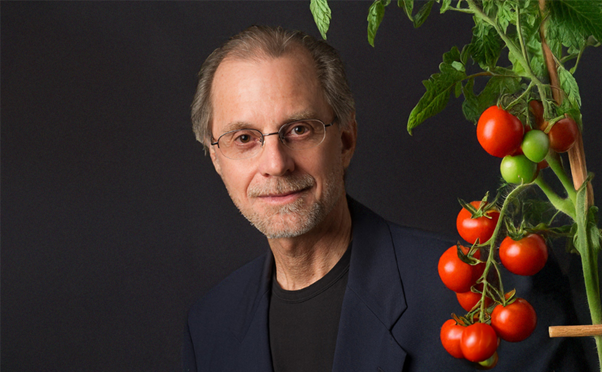
Steven Tanksley and the Tomato Code – The Pioneer of DNA Markers

In the late 1980s, Steven Tanksley transformed plant breeding by bringing DNA into the field. His pioneering work at Cornell produced the first comprehensive marker map of the tomato genome, laying the foundation for marker-assisted selection—now a cornerstone of modern, non-GMO breeding. From fruit shape to disease resistance, Tanksley’s breakthroughs turned invisible genetic information into practical tools used by breeders worldwide. And remarkably, it all began with a tomato.
Read More »

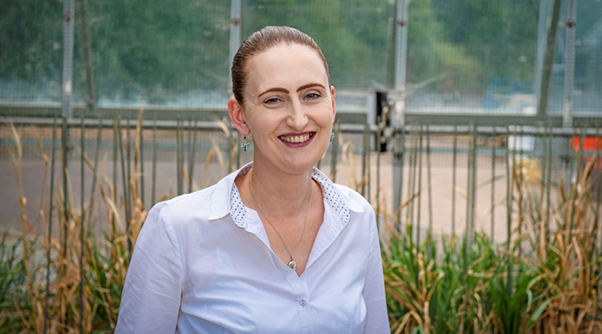
Two Paths Forward: Diane Saunders and Conventional Breeding and Gene Editing

Professor Dianne Saunders is leading the charge against some of agriculture’s oldest and most devastating diseases, including wheat rust. Her team pursues two parallel breeding pathways: slow but trusted conventional breeding, and precise, accelerated gene editing using CRISPR. From genome-edited wheat trials in Kenya to the cautious stance of European breeders, this piece explores the scientific, regulatory, and economic forces shaping the future of crop improvement.

Read More »