
Steven Tanksley and the Tomato Code – The Pioneer of DNA Markers
In the late 1980s, while most plant breeders were still relying on their eyes and field notes to select for traits, one geneticist in upstate New York was using enzymes and gel electrophoresis to peer inside the tomato genome.
Steven D. Tanksley, a professor at Cornell University, believed that plant breeding was ripe for a scientific leap. Instead of waiting for plants to grow, flower, and fruit—only then learning which ones carried the desired traits—why not read their DNA directly?

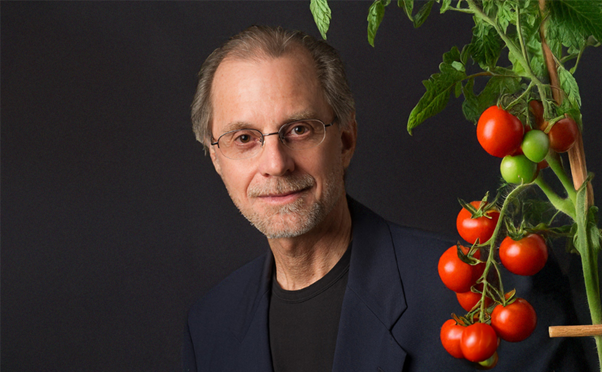
Steven D. Tanksley © KRWG
In 1988–89, Tanksley and his team developed the first comprehensive DNA marker map of the tomato genome. They used restriction enzymes to cut DNA into fragments and identified patterns that were inherited along with traits like fruit size, shape, and disease resistance. This was a radical departure: breeding could now be linked to the molecular level.
It was the birth of marker-assisted selection (MAS)—a method that would go on to revolutionise how crops are bred, from tomatoes to wheat.
Tanksley’s most enduring legacy wasn’t just in tomatoes. His research laid the groundwork for the PCR-based marker systems that soon followed, making MAS faster, cheaper, and scalable. These markers allowed breeders around the world to screen thousands of seedlings for traits like disease resistance, drought tolerance, or flavour—without waiting for the plant to mature.
“Tanksley showed us that the invisible could be actionable,” said one breeder. “He gave us a molecular handle on traits that had eluded us for decades.”
Monsanto’s patents on GM seeds created commercial barriers, pushing other companies to develop alternative, non-GMO methods of improving efficiency in breeding. Today, MAS is central to non-GMO breeding programmes at crop research centres, commercial plant breeders and national crop breeding around the world.
At Rijk Zwaan, the world leading glass house vegetable breeder, MAS is now foundational. As Jack de Wit puts it:
“Marker analysis is the bread and butter of our breeding process.”
Rijk Zwaan analyses over 100 million marker data points per year, using only a fraction of them for full gene sequencing. This approach allows them to breed glasshouse vegetable varieties tailored to national tastes and supermarket standards—including over 500 different varieties of lettuce.
And to think it started with a tomato.